Keep the geography precise
The Jura and the Alps are neighbouring mountain systems, not interchangeable labels. Their cheese histories overlap in useful ways: pastoral economies, collective milk processing and the need to preserve a seasonal resource. Yet a shared interest in durable wheels does not erase differences in production areas, milk rules, manufacture or maturation.
Protected designations help describe those differences. AOP is the French-language abbreviation commonly used for a protected designation of origin; DOP is its Italian counterpart. Switzerland also operates its own protection system. A protected name refers to a defined specification, not a promise that every wheel tastes identical or that every maturation room looks traditional.
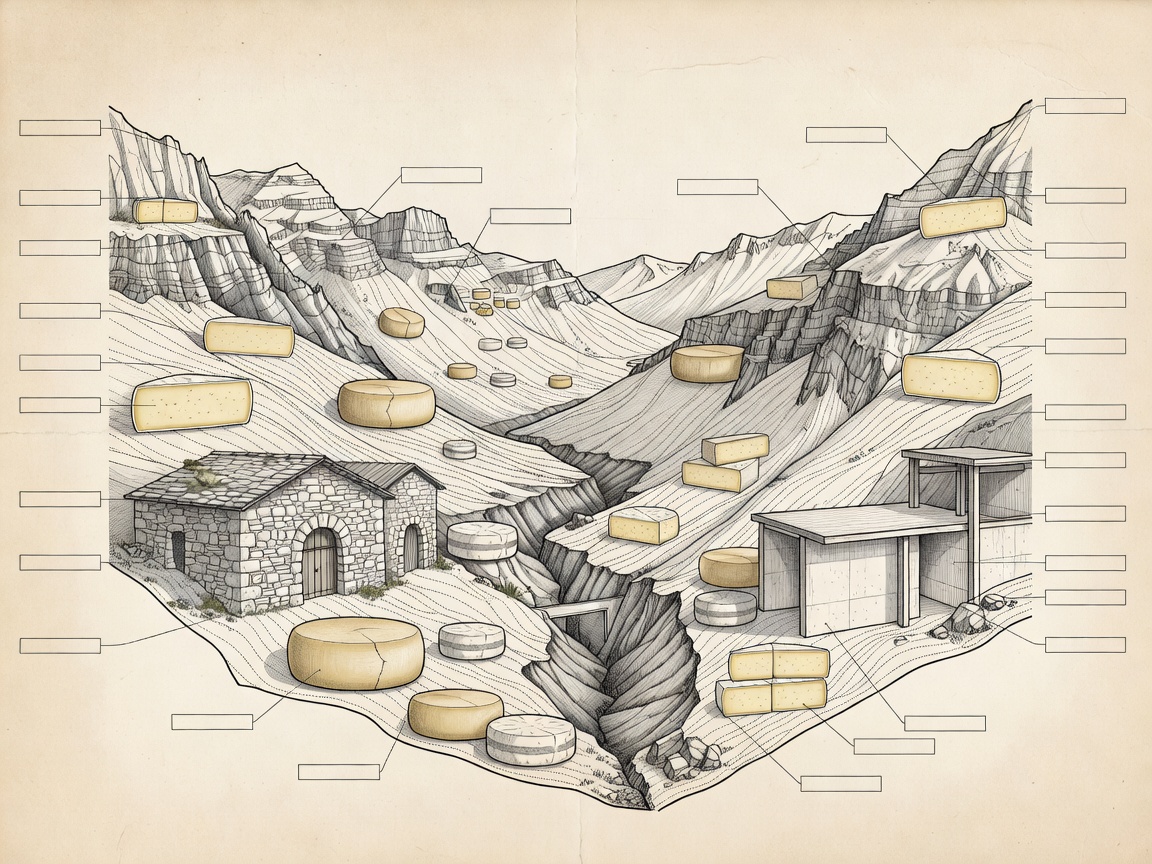
Jura: collective making, specialist maturation
Comté provides a particularly clear route into the Jura's cheese culture. Its story includes fruitières, the local cheesemaking organisations associated with pooling milk and making large wheels. Maturation may then take place with specialist affineurs. These relationships connect farms, dairies and cellars rather than locating all expertise in one picturesque building.
The Fort des Rousses is a well-known example of an adapted structure associated with Comté affinage. Its visual drama should not obscure the cheese's earlier history in the dairy. Morbier, another Jura cheese, belongs to a different specification and cannot be understood simply as a smaller Comté. The region offers several traditions, not one template repeated at different sizes.
Savoie: shared landscape, distinct cheeses
Beaufort is associated with the high mountain setting of Savoie and a cooked, pressed cheese tradition. Abondance also comes from this broader Alpine world, but it has its own identity and requirements. Reblochon introduces another scale and texture, reminding the traveller that mountain cheese is not synonymous with a large, long-matured hard wheel.
Seasonal pasture, farmhouse production and dairy organisation may be important parts of a producer's account. Those terms should be read carefully rather than used as automatic rankings. Ask which description applies to the actual cheese being tasted. The official specification, not a landscape photograph, is the place to check rules governing a protected name.
| Place | Examples | Useful question |
|---|---|---|
| Jura | Comté, Morbier | Where was the wheel made, and where was it matured? |
| Savoie | Beaufort, Abondance, Reblochon | Which production category and care system apply? |
| Western Switzerland | Le Gruyère AOP, L'Etivaz AOP | What does the designation say about production? |
| Swiss Alpine regions | Raclette du Valais AOP, Sbrinz AOP | How do form and intended use affect maturation? |
| Italian Alps | Fontina DOP, Bitto DOP | Which local specification governs this cheese? |
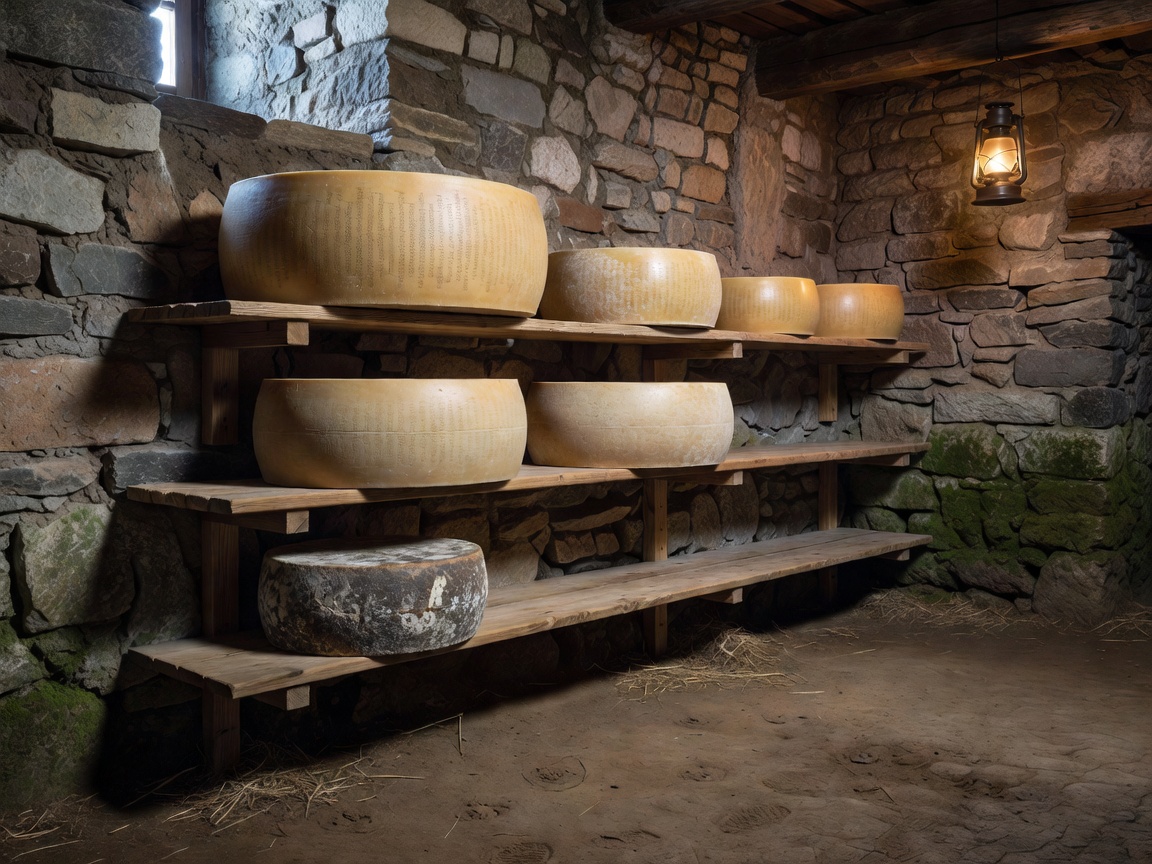
Switzerland is not one cellar
Le Gruyère AOP offers an established reference for understanding Swiss cooked, pressed cheese and its care. L'Etivaz AOP has a distinct high-pasture identity and specification. Their relationships to place deserve more precision than the broad expression “Swiss mountain cheese”. A visitor gains more from learning the individual name than from assuming a national technique.
Raclette du Valais AOP and Sbrinz AOP widen the comparison further. Their forms, uses and maturation traditions differ. Serving a cheese melted is not evidence that maturation was unimportant; equally, a firm texture does not establish a single age or cellar environment. Producers' own technical information is the appropriate source for those details.
Across the Italian Alps
Fontina DOP, associated with Valle d'Aosta, demonstrates how another Alpine region links a protected cheese with local production and maturation practices. Bitto DOP, associated with Lombardy's mountain areas, offers a different tradition again. These names are useful precisely because they prevent the landscape from becoming a vague guarantee of sameness.
Not every celebrated cheese matured in a cave or cool room is Alpine. Roquefort, for example, belongs to a separate geographical and technological story. Nor should every cheese made near mountains be assumed to mature underground. Keep the location of milk production, the dairy and the maturation site as three separate questions until a producer connects them.
Use institutions as a check
France's INAO, the Swiss Association for AOP-IGP and the European Commission's geographical indications resources help establish what names mean. Producer organisations then provide more focused explanations of manufacture, care and regional history. These sources are especially useful when a travel account compresses a complex specification into a sentence about mountain air.
A satisfying regional comparison does not need a winner. It needs a clear account of what differs and why. Carry that approach to the tasting table: compare a named wheel's make, maturation and condition rather than asking which mountain produces the “best” cellar flavour.
Reference notebook
- INAO — French protected designations.
- Swiss Association for AOP-IGP — Swiss protected regional products.
- European Commission — geographical indications and quality schemes.
- Comté, Beaufort and Le Gruyère AOP — regional starting points.