Ask for a history, not a legend
A tasting becomes more interesting when a cheese has a clear identity. Record its name, maker where available, maturation information and the date you taste it. Ask whether the person selling it knows where it was matured and how it has been handled since leaving that site. These details distinguish a particular wheel from a generic idea of mountain cheese.
The answer may be incomplete, and that is acceptable. A retailer may know the affineur but not the original shelf position. A guide may describe the usual process without having a record for your exact piece. Good interpretation keeps those levels separate. It does not turn a plausible regional story into a documented history for every slice.
Observe before naming flavours
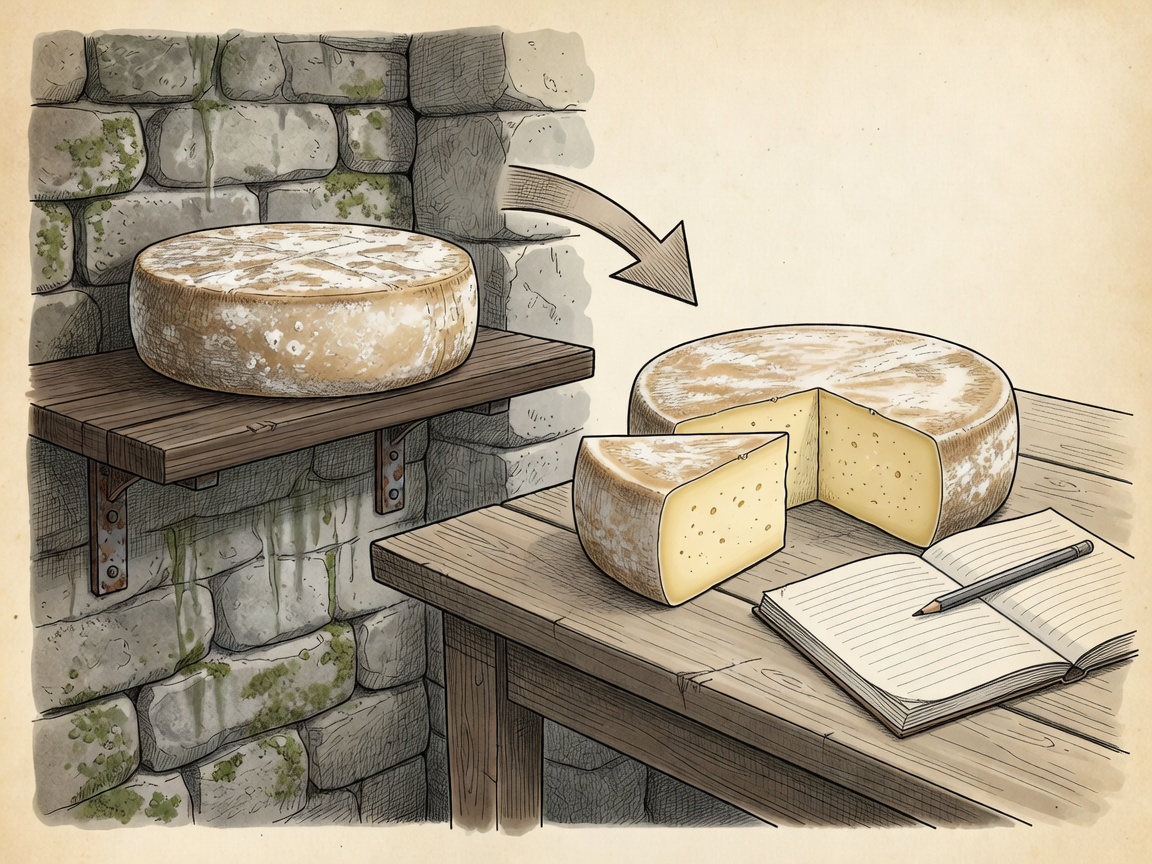
Look at the paste, meaning the interior of the cheese, as well as its rind. Notice colour, visible openings, any gradient near the surface and how the cut face behaves. A firm cheese can be elastic, crumbly or resistant in different ways. These observations are often easier to discuss precisely than a long list of imagined aromas.
Smell a small piece without demanding that it reveal a particular landscape. Words such as nutty, milky, grassy, savoury or earthy can be useful descriptions, but they are comparisons, not ingredient lists. An earthy aroma does not prove that minerals from a stone wall entered the cheese. Your vocabulary can remain modest and still be accurate.
Let texture share the work
Take a small bite and consider how it changes as you chew. Does it soften readily? Break into flakes? Feel smooth, granular or springy? Notice salt, acidity, bitterness and savouriness alongside aroma. A mature cheese may show crystalline sensations, but identifying a particular crystal type from mouthfeel alone is not reliable. Texture gives evidence; it does not answer every chemical question.
Temperature influences perception. Cheese taken straight from a cold refrigerator may present differently from a piece allowed to warm appropriately before serving. Follow the seller's storage and serving advice, keep portions protected and avoid leaving perishable foods unrefrigerated for prolonged periods. There is no need to sacrifice sensible handling for a theatrical tasting ritual.
Compare one variable at a time
If possible, compare cheeses of the same named style with different documented maturation histories. Even then, milk season, maker and batch can differ. Treat the exercise as a conversation, not a controlled experiment. Two Comté samples may suggest the effects of age without proving that age caused every difference.
A cross-regional tasting asks another question. Le Gruyère AOP beside Beaufort can reveal differences in overall character, but it cannot isolate the effect of the cellar. The cheeses differ before maturation begins. Use the regional comparison to keep those earlier stages visible.
Visit a working cellar respectfully
Check access arrangements directly with the operator. A maturation room is a food-production space, not an unrestricted attraction. Guided routes, protective clothing, photography rules and limits on touching are part of protecting the work. Never handle a wheel or step into a production area without permission, however inviting the shelves appear.
Ask concise questions at an appropriate moment: What is this room doing for these cheeses? How do routines change through the year? What makes a wheel ready to leave? These questions invite explanations about craft and environmental management without requiring a guide to invent a tasting note for every stone in the wall.
Rinds, suitability and personal needs
Do not assume every rind is intended to be eaten. Coatings, treatments and the producer's advice vary. Ask the retailer when uncertain. Cheese contains milk, and individual dietary or medical considerations may affect what is suitable. People who need advice about pregnancy, immune vulnerability or other health concerns should follow relevant public-health guidance and their clinician's recommendations rather than a travel feature.
This guide does not make health claims for raw-milk cheese, long maturation or traditional cellars. Nor does a protected designation remove the need for appropriate storage and handling. Sensory pleasure and food safety are related parts of a visit, but one cannot be established solely by the other.
Leave room for preference
Prestige can make a tasting feel like an examination. It need not be. You may prefer a younger, more supple wheel to a firmer, more intense one. Older is a description, not a universal ranking. The most useful note explains what you noticed and enjoyed, with enough context to find something similar again.
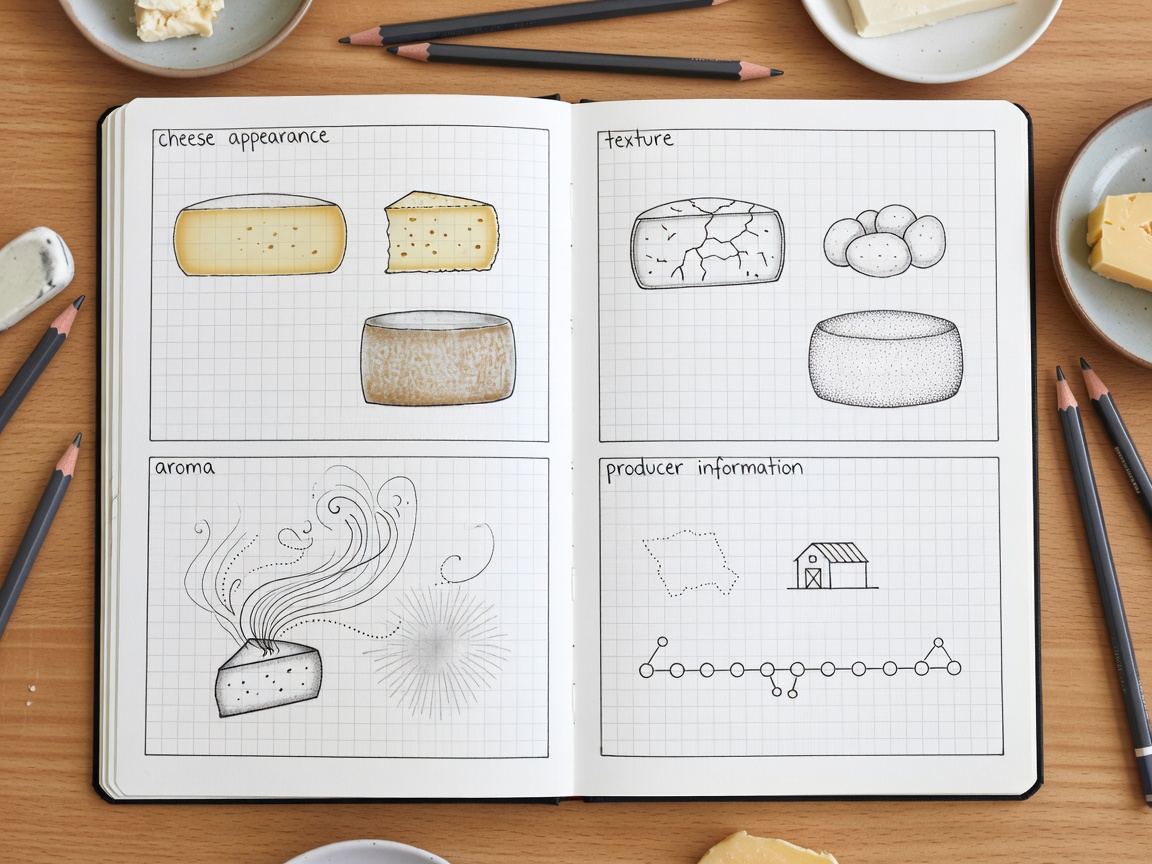
Finish with a short record: cheese, source, available maturation information, texture, aroma and your own preference. Add unanswered questions rather than filling gaps with certainty. If a visit leaves you curious about a room or a routine, use the cellar notebook to compose a clear enquiry.
Further reading
- Comté — official tasting and production context.
- Le Gruyère AOP — cheese identity and maturation.
- Food Standards Agency and Food Standards Scotland — current food-safety guidance.